



Europa Clipper Detects Magnetic Signature of Hidden Ocean on First Flyby
Read the full article for context, quotes, and updates from the team.
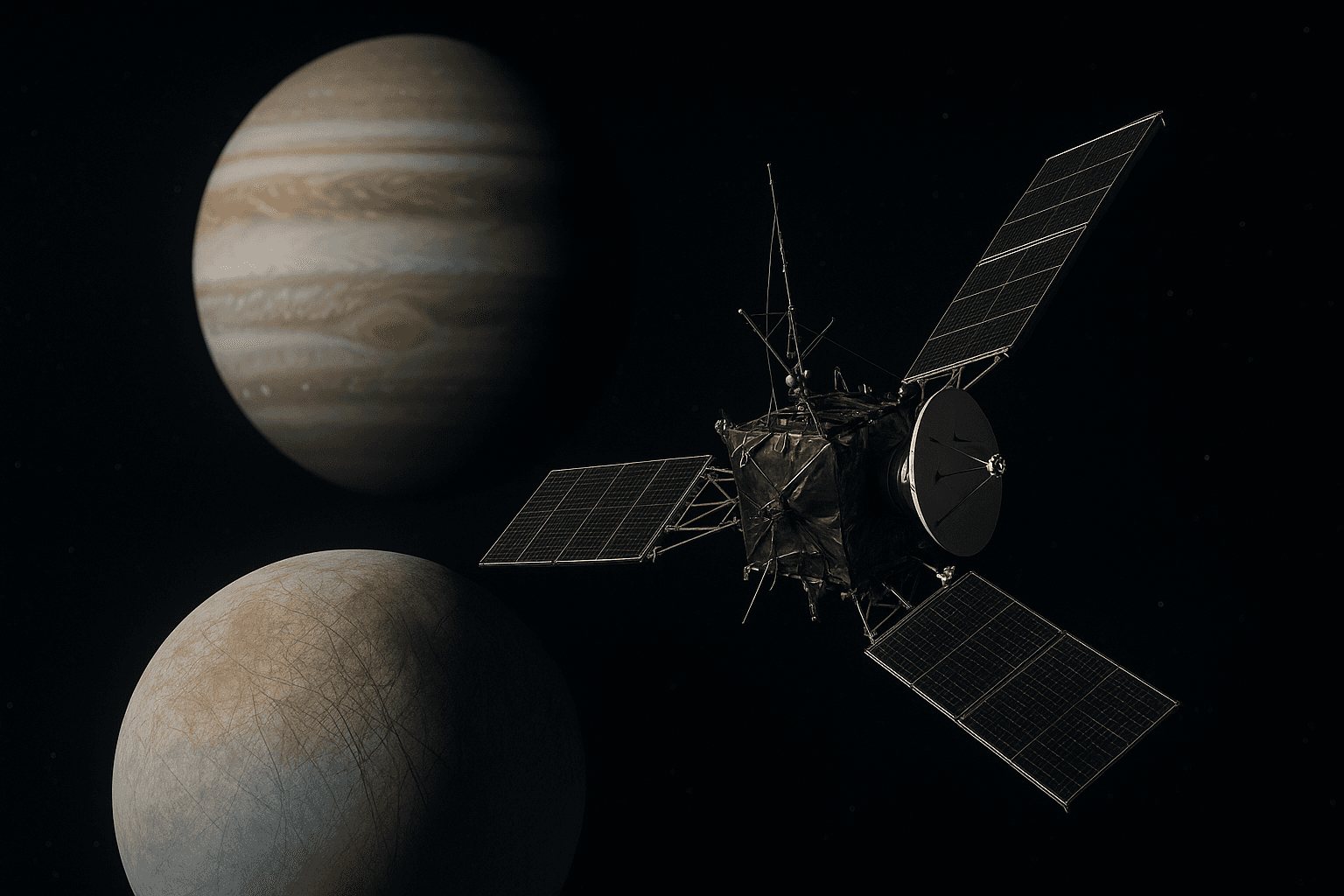
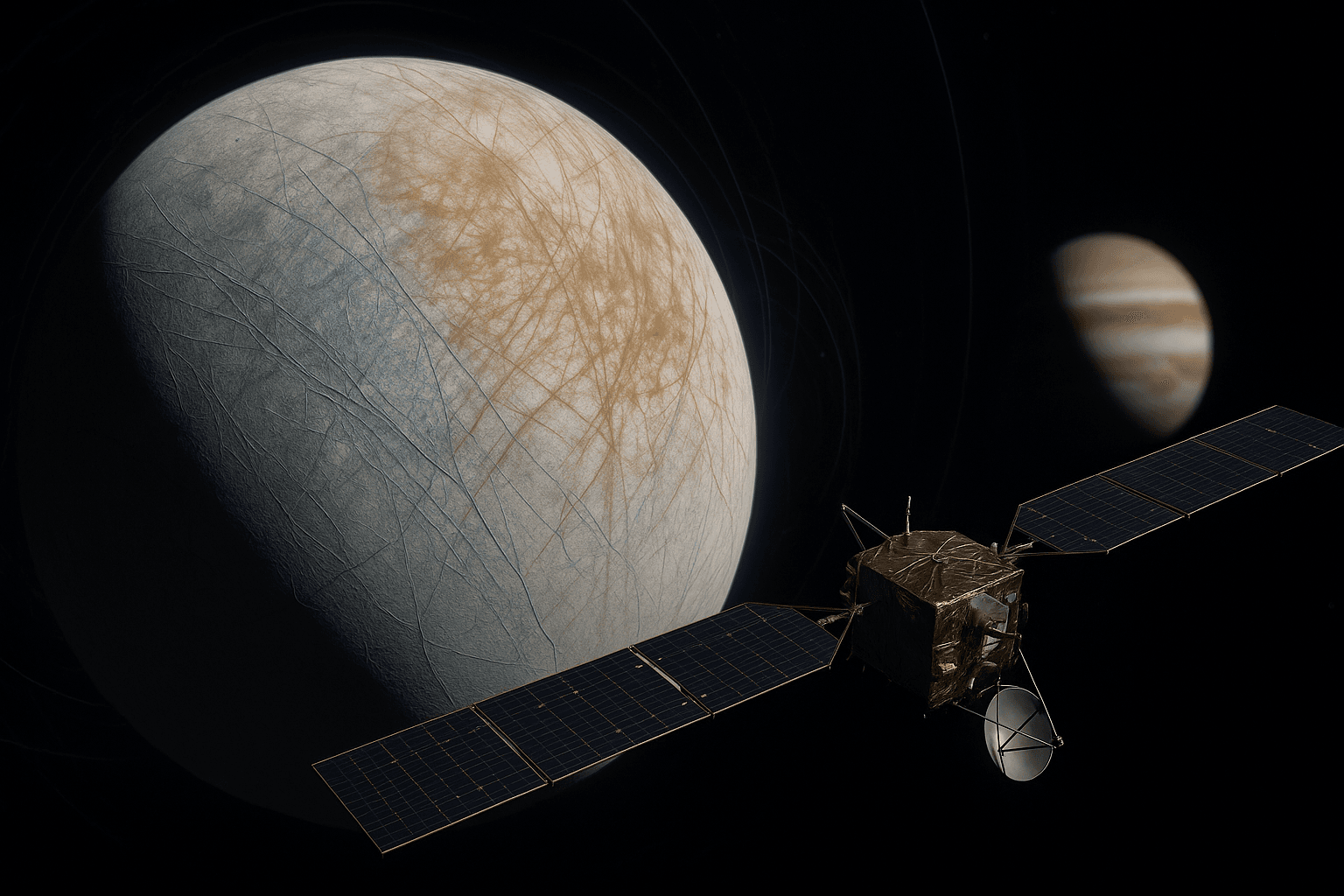
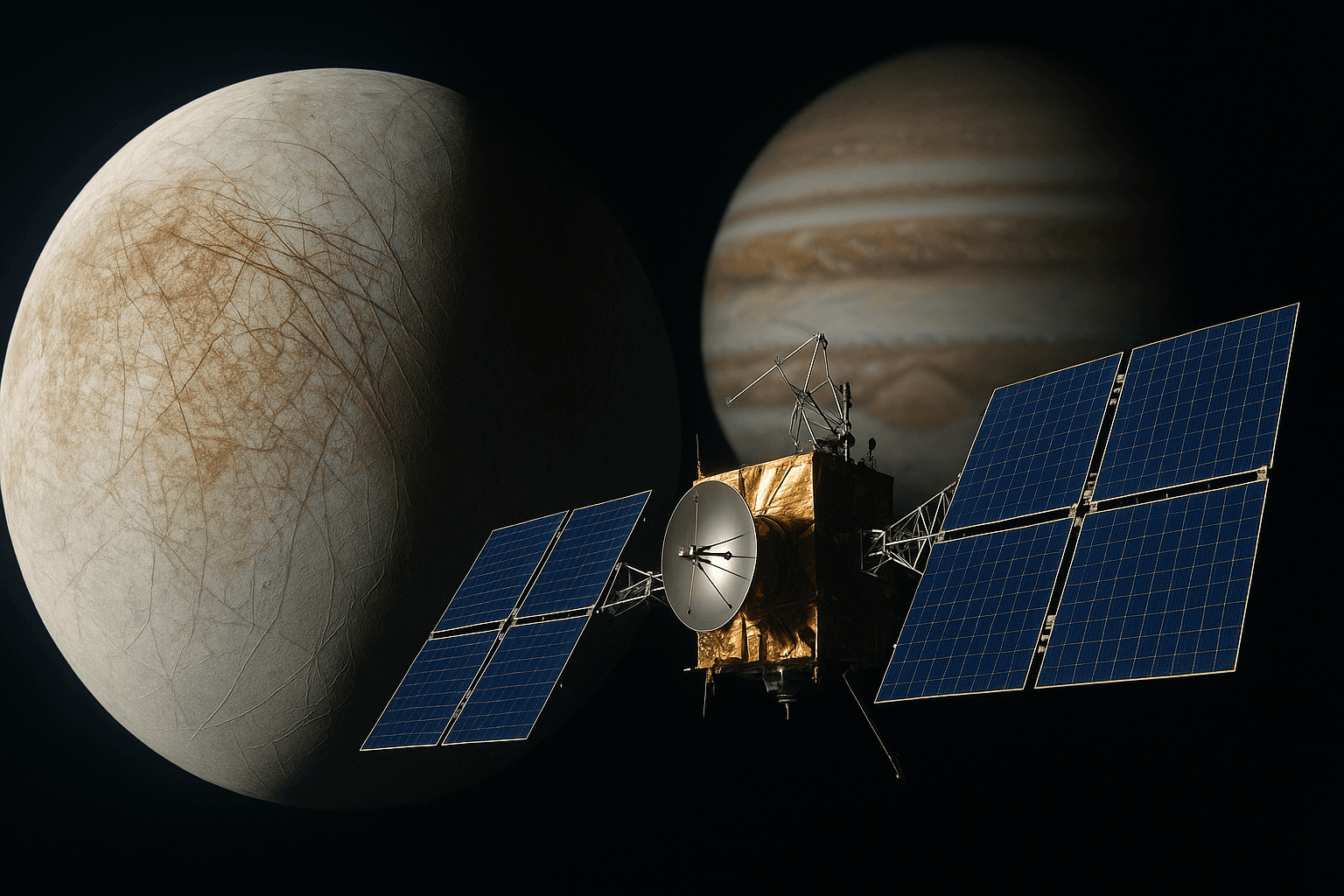
NASA’s Europa Clipper has completed its first close flyby of Jupiter’s icy moon Europa, marking a major milestone in the mission’s search for habitable environments beyond Earth. The spacecraft, launched in October 2024, passed Europa on December 31, 2024, collecting high-resolution images and measuring the moon’s induced magnetic field.
Scientists say the magnetic data strongly supports the long-suspected presence of a global subsurface ocean beneath Europa’s frozen crust. That hidden ocean is one of the most compelling targets in planetary science because it may contain the chemical ingredients and energy sources needed for life.
The flyby also provided detailed visual observations of Europa’s surface, helping researchers study its fractured ice terrain and refine plans for future encounters. Mission scientists described the results as an important early success that will shape the next phase of the mission and improve understanding of the moon’s geology and interior structure.
Europa Clipper’s findings add to growing evidence that icy moons in the outer solar system may be among the most promising places to look for habitable conditions. As the spacecraft continues its journey, scientists will use the new data to guide future flybys and deepen the search for what lies beneath Europa’s frozen shell.